【Profile】
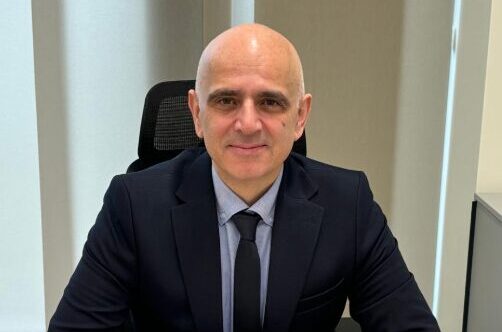
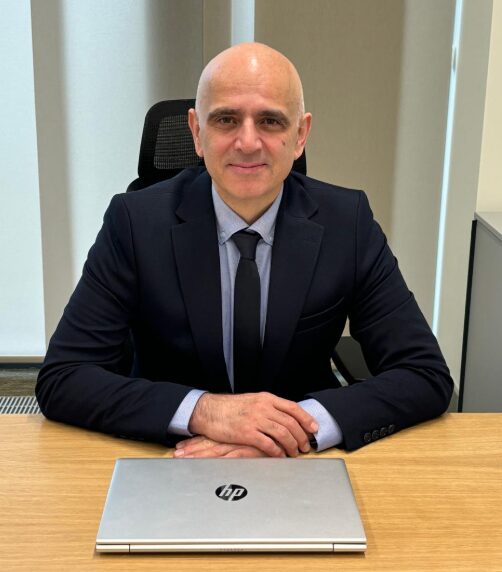
Head of Innovation and Entrepreneurship Development at Kutaisi International University Campus (KUCA). He has nine years of experience living and working in Japan, studied in the doctoral program at Hosei University, and obtained a Ph.D. in Japanese local government from the Moscow Institute of Oriental Studies. He has an international business and academic career spanning over 30 years, including work with Japanese companies and international project management. He is fluent in Georgian, Japanese, English, and Russian.
1. Could you briefly introduce the career path you have taken so far?
My career began with a deep involvement with Japan. From 1982 to 1988, I majored in Japanese History and Language at the Institute of Asian and African Studies at Moscow State University. During this time, I lived in Japan from October 1986 to July 1987, and again from March 1991 to December 1998. I studied Japanese at the Tokai University International Education Center, attended doctoral seminars at Hosei University, and worked in Tokyo and other regions as a lecturer, interpreter, translator, and business consultant.
After returning to Georgia, I utilized my research results on the Japanese local government system to serve as the Head of the International Information Analysis Department for the Government of the Autonomous Republic of Adjara in Georgia (1999-2004). Following that, I was responsible for ODA projects as a Project Manager and Local Coordinator for Japanese technical and grant aid-related projects (2004-2009). Subsequently, I worked at the Japan-Asia Information Center based in Osaka as a Consultant and Project Manager, engaging in international projects in countries such as Mongolia, Ukraine, and Russia (2009-2015).
In recent years, after serving as the local project coordinator for Tokyo Rope International in Georgia and the Executive Director of the Georgian Producers Federation, I am currently the Head of Innovation and Entrepreneurship Development at Kutaisi International University (KIU), where I promote the university’s innovation ecosystem construction and international cooperation, particularly academic and industrial collaboration with Japan.
2. What sparked your interest in learning Japanese, and what was your experience like studying in Japan at Tokai University?
The catalyst for learning Japanese was my growing desire to learn the language after watching Japanese films, reading Russian translations of Japanese literary works (such as Ryunosuke Akutagawa, Kenzaburo Oe, Yasunari Kawabata, etc.) during my high school years in Georgia, and attending a popular karate club at the time. This led me to choose Japanese as my major at Moscow State University. Furthermore, Japan was viewed as an economic powerhouse in the Soviet Union at the time, and I developed a strong interest in its history, culture, and rapid economic development. I was also fascinated by the beauty and complexity of the Japanese language and decided to pursue the path of Japanese studies.
My time studying abroad at the Tokai University International Education Center was one of the most fruitful periods of my life. For nearly a year, from 1986 to 1987, I studied in an intensive Japanese language program. I was able to learn not only comprehensive Japanese language skills—speaking, writing, listening, and reading—but also a wide range of subjects including Kanji, Japanese literature, economics, politics, and culture. Through interactions with Japanese students and other international students, I experienced living Japanese language and culture that cannot be learned from textbooks.
Afterwards, I returned to Japan in 1991 to pursue my doctoral research at Hosei University, while also working as a lecturer, interpreter, and translator, primarily in Tokyo. I stayed in Japan until 1998, and over these nearly eight years, I gained a deep understanding of Japanese society and became fully integrated into the Japanese business culture and academic environment. My friends often tell me that this experience is now my strength in international business and academic cooperation.
3. What is needed for the economic relationship between Japan and Georgia to become stronger? Also, have you felt any differences in business customs between the two countries?
I believe there are three key elements to strengthen the economic relationship between Japan and Georgia.
Firstly, “Building mutual understanding and trust.” Japanese companies prioritize quality, reliability, and long-term relationships. On the other hand, Georgia is still a market that is not well-known to Japan. It is essential to increase human exchange between the two countries, especially student exchange and training programs for the younger generation, to deepen mutual understanding.
Secondly, “Promoting concrete cooperation projects.” Georgia is strategically located, connecting Europe and Asia, and offers an attractive investment environment, including free economic zones and tax incentives. It is important to realize concrete projects that combine Japanese technology and investment with Georgia’s geographic advantage and growing market in sectors such as infrastructure, energy, IT, and agricultural product processing.
Thirdly, “Collaboration in academic and innovation fields.” Through inter-university cooperation, joint research, technology transfer, and startup support, we can build a foundation for next-generation cooperation.
Regarding differences in business customs, I have certainly felt some discrepancies. Japanese business culture is characterized by meticulous preparation, detailed planning, consensus-building, and a long-term perspective. In contrast, in the post-Soviet region, including Georgia, there is an emphasis on more flexible and speedy decision-making and the importance of personal relationships. However, in my experience, these differences are not obstacles but rather opportunities for us to learn from each other and create better business practices. What is important is to respect each other’s culture and communicate with sincerity.
4. You are currently serving as the Head of Innovation and Entrepreneurship Development at Kutaisi International University. What kind of activities are you engaged in?
My current role at Kutaisi International University (KIU) and its Campus Operating Agency (KUCA) is to build an innovation and entrepreneurship ecosystem and develop the university as a regional innovation hub.
Specifically, the first activity is the “Development of Incubation and Acceleration Programs.” We are designing programs to support students, faculty, and regional entrepreneurs, and establishing an environment for nurturing startups. We are currently in the stage of building systems to provide co-working spaces, mentoring, and business development support.
Next is the “Promotion of Industry-Academia Collaboration.” We are creating opportunities to put the university’s research results into practical use and provide students with practical experience through collaboration with local companies, international companies, and venture funds.
The most important is “International Cooperation and Partnership Building.” We are particularly focused on collaboration with Japanese universities, research institutions, and companies. Currently, we are leveraging the networks with three Japanese universities—my alma mater, Tokai University, as well as Chiba Institute of Technology and Waseda University—to promote academic exchange, joint research, technology transfer, and mutual exchange of students and faculty.
I am also involved in the project concept development for the “Technology Free Economic Zone (TFEZ)” in Georgia, which is an ambitious initiative to establish an international-level “Smart Silk Road” hub. This project positions Georgia as a bridge for technology and innovation connecting Europe and Asia.
5. Finally, do you have a message for Japanese companies interested in Georgia?
My message to Japanese companies is that Georgia is not just an emerging market, but a “strategic gateway connecting Europe and Asia.”
Georgia has many attractive features. Firstly, “Geographic Advantage.” Located on the Black Sea, it has excellent access to Europe, Central Asia, and the Middle East, and holds an important position in the international transit route initiative.
Secondly, “Favorable Business Environment.” Georgia consistently ranks high in the World Bank’s “Doing Business” ranking, and free economic zones offer incentives such as corporate tax exemption. Furthermore, the Deep and Comprehensive Free Trade Area (DCFTA) agreement with the EU provides easy access to the EU market.
In addition, “Highly Skilled Human Resources.” Georgia’s younger generation has a high level of education and excels in IT, engineering, and language skills. Labor costs are lower compared to Western Europe, allowing for the securing of high-quality workforce.
And above all, “Japan-Friendly Culture.” Georgians highly value Japanese culture, technology, and business integrity, and welcome cooperation with Japanese companies.
I myself have been active as a bridge between Japan and Georgia for over 30 years. I deeply understand the languages, cultures, and business practices of both countries, and I am prepared to support Japanese companies in succeeding in Georgia. Universities teaching technology programs in Georgia, including KIU, sincerely look forward to cooperating with Japanese companies as a platform for academic cooperation, human resource development, and innovation collaboration.
Georgia is a country full of new business opportunities, research collaboration, and cultural exchange possibilities for the people of Japan. I sincerely hope that you will turn your attention to Georgia at this time and build a relationship where we can grow together.
Contact Information (Mr. Giorgi Pipia’s contact/LinkedIn for job requests, etc.) LinkedIn