【Profile】
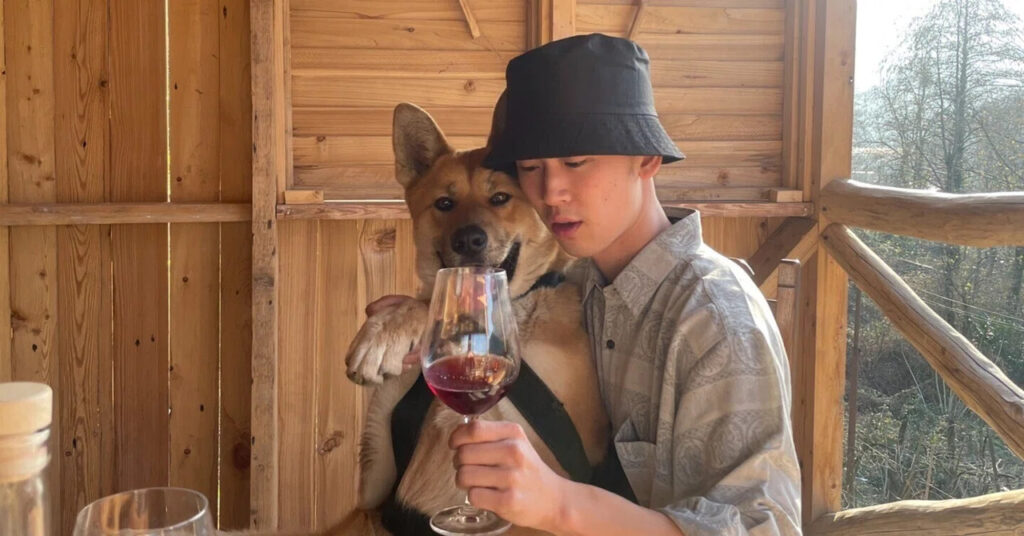
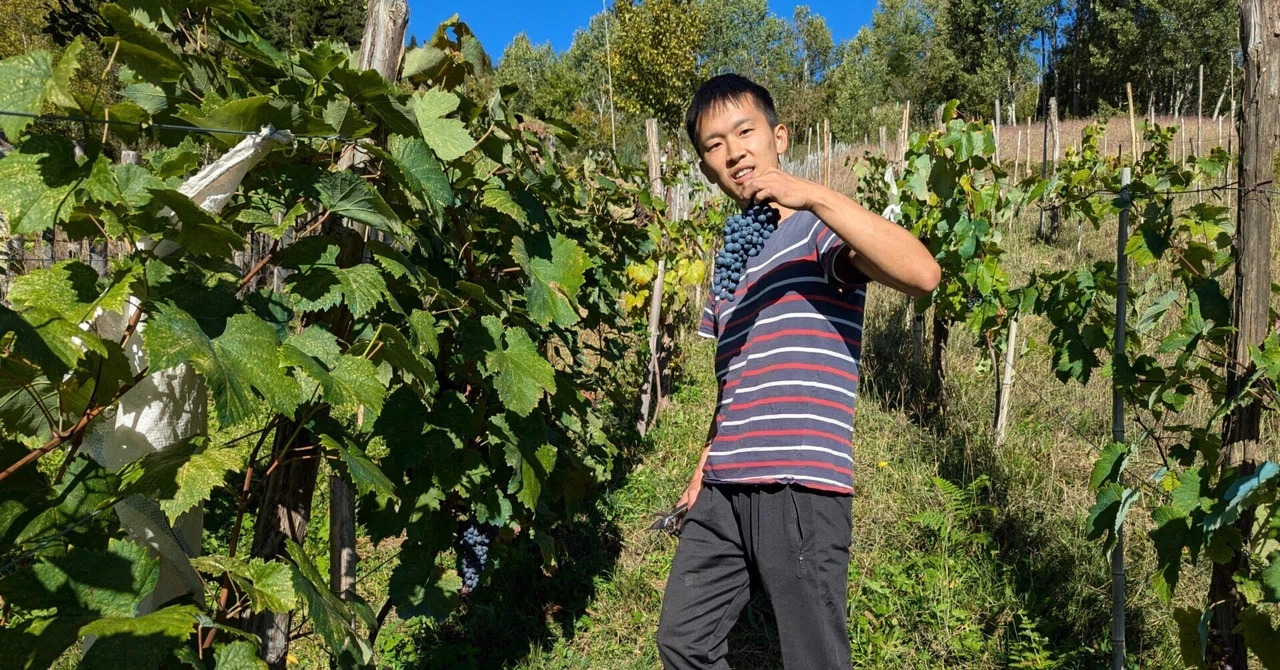
He has lived in Georgia for seven years and aims to produce his own Georgian wine. He completed a master’s program at a Georgian graduate school. Works as a Japanese language teacher, translator, and interpreter. Passed the Georgian language exam at the B2 level. His beloved dog is Hailey.
① What inspired you to learn about Georgia and decide to visit?
After developing a taste for alcohol, I became fascinated by the process and culture of wine-making. At 22, I went to France on an exchange program to study wine. One day, there happened to be a lecture on Georgian wine. I was intrigued by the unfamiliar grape varieties and unique production methods. Coincidentally, one of my classmates was Georgian and gave me a bottle of Georgian wine for my birthday — a Rkatsiteli made using the Qvevri method.
The moment I took a sip, I was struck by its completely different flavor and depth compared to European wines. I also intuitively felt that it would pair well with Japanese cuisine.
At that time, I hadn’t decided on my path after the exchange program, but I was captivated by the mystery of Georgian wine and wanted to learn more. Georgia itself wasn’t well-known then, and information was scarce, so part of my motivation was a sense of adventure — I wanted to live in such a country. That’s how I decided to study in Georgia.
② What do you find most appealing about Georgian wine?
Georgia is said to be the birthplace of wine, with an 8,000-year history. For me, the greatest charm lies in the fact that traditional methods — especially Qvevri winemaking — are still preserved today. I think that’s because Georgians have deep pride and respect for their history.
Each region has slightly different techniques and grape varieties, which makes Georgian wine fascinating from a wine tourism perspective as well.
③ You completed your master’s degree at a Georgian university. What was your graduate school life like?
All my classmates were Georgian, so soon after arriving, I was able to build friendships with people my age — that was meaningful. Most students worked full-time, so classes were scheduled mainly in the evenings, which felt refreshing.
My studies overlapped with the pandemic, so I could only go to campus for essential classes and experiments. Looking back, I wish I had used the library and student community more.
Still, I had great experiences — internships at wineries, professors taking us to visit various wineries and events. Those were invaluable opportunities.
Beyond classes and my thesis, graduate school helped me adapt to life in Georgia. It was a meaningful time that broadened my understanding not only of wine but of Georgia itself.
④ You’ve lived not only in Tbilisi but also in various regions. What do you enjoy most about rural life?
It’s easier to live with animals — especially my dog, Hailey. Walking through fields and forests seems less stressful for her than walking on concrete. Naturally, being surrounded by nature feels wonderful — waking up to the sound of chickens and birds singing is a great way to start the day.
⑤ What are your future plans in Georgia?
I’m finally about to start making my own wine. That’s my main focus for now.
Also, living with animals in the Georgian countryside makes for interesting stories, so I’d like to find ways to share those experiences with others.