
【Profile】
From 2023 to 2026, due to his family’s work, he moved to Georgia. For three years, he attended an international school in the capital city, Tbilisi.
① What was your first impression when you came to Georgia?
I was struck by how free and open both the people and the city felt. At the market, people would casually talk to me and offer fruit samples, and on the subway, they would quickly give up their seats for children. In everyday life, I could feel a warm kindness and genuine care for kids everywhere.
② What was school life like in Georgia?
When I first arrived, my English was almost nonexistent, so just keeping up with classes and homework every day was a struggle. I studied with a dictionary at home, but I was amazed at how quickly I picked up words intuitively through conversations with friends and teachers. My school had students from more than 50 countries, so I was able to talk with people from all over the world. During class discussions and presentations, everyone respected each other and spoke freely without fear of mistakes. Seeing that gave me confidence little by little.
③ How did you study English and Georgian?
Being in an environment where I had to listen and speak English every day to get by helped me gradually understand what teachers and friends were saying, as well as the explanations in textbooks. As for Georgian, I started by learning words I needed for daily life—like shopping at the market—searching them on my phone as I went. Using greetings and simple phrases made locals so happy, which motivated me to keep learning. Georgian is such a unique and fascinating language, but self-study was tough, so I was helped a lot by Mr. Suginaka’s YouTube channel.
④ What is your most memorable experience from your three years in Georgia?
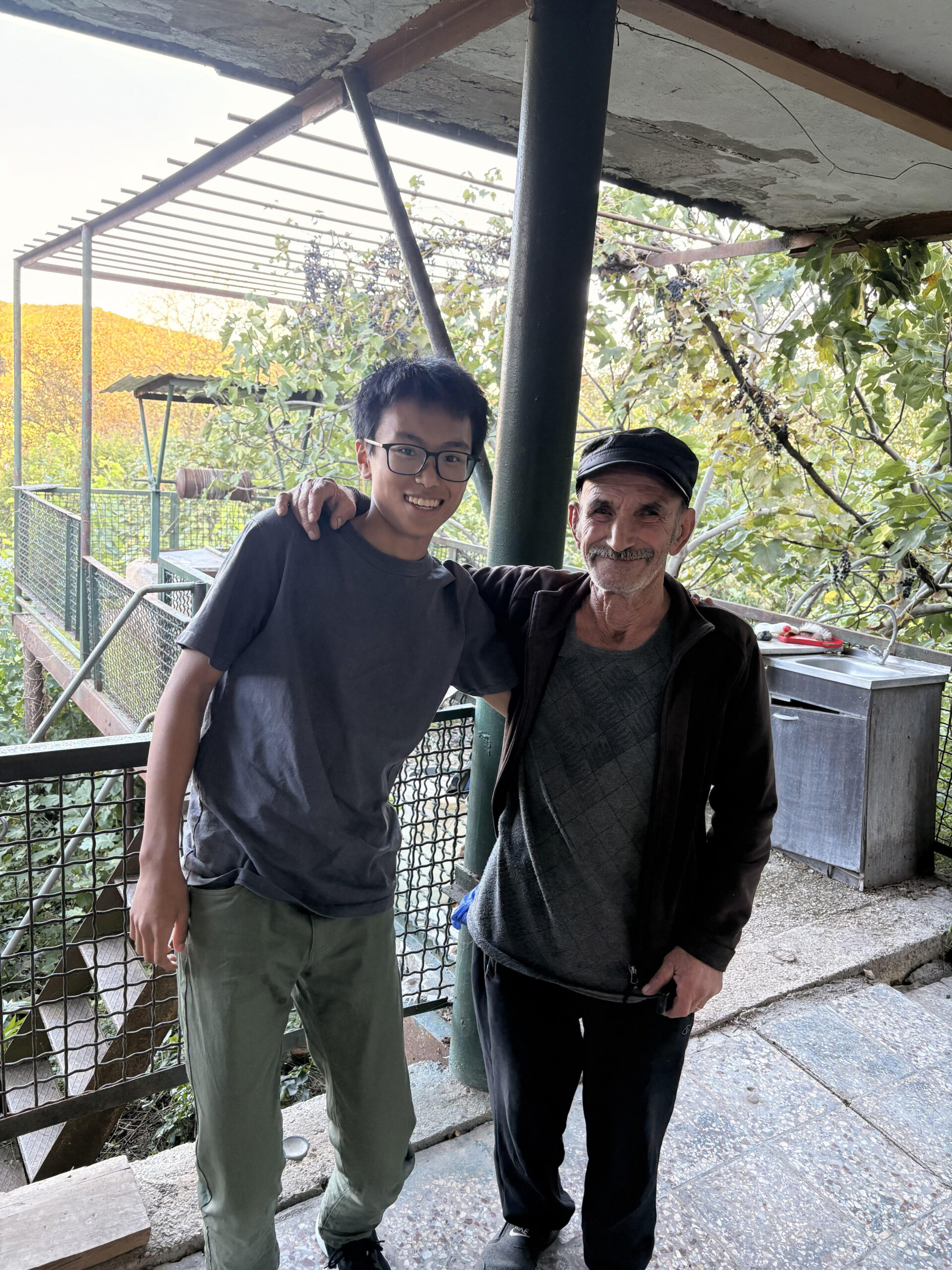
It’s hard to choose just one, but I really enjoyed spending weekends with a Georgian family we became close to. They often invited us over, and I loved eating delicious homemade Georgian dishes that you can’t find in restaurants. Talking with them about Georgian history, language, and culture was fascinating. One unforgettable experience was helping clean the traditional wine-making clay vessel, the qvevri, during the grape harvest season—a rare opportunity even for Georgians.
⑤ What message would you give to people who are thinking about studying at a Georgian school?
Time spent at a Georgian school will truly expand your world. The environment is completely different from Japan, so it might be challenging at first. But instead of aiming for perfection by studying alone at home, go outside and interact with people around you—it’s much more fun and you’ll grow faster. Even if your words aren’t perfect, people in the city and at school will warmly accept your efforts to communicate. Before you know it, you’ll gain a genuine sense of confidence. Forget your worries and enjoy the experience at your own pace!