【Profile】
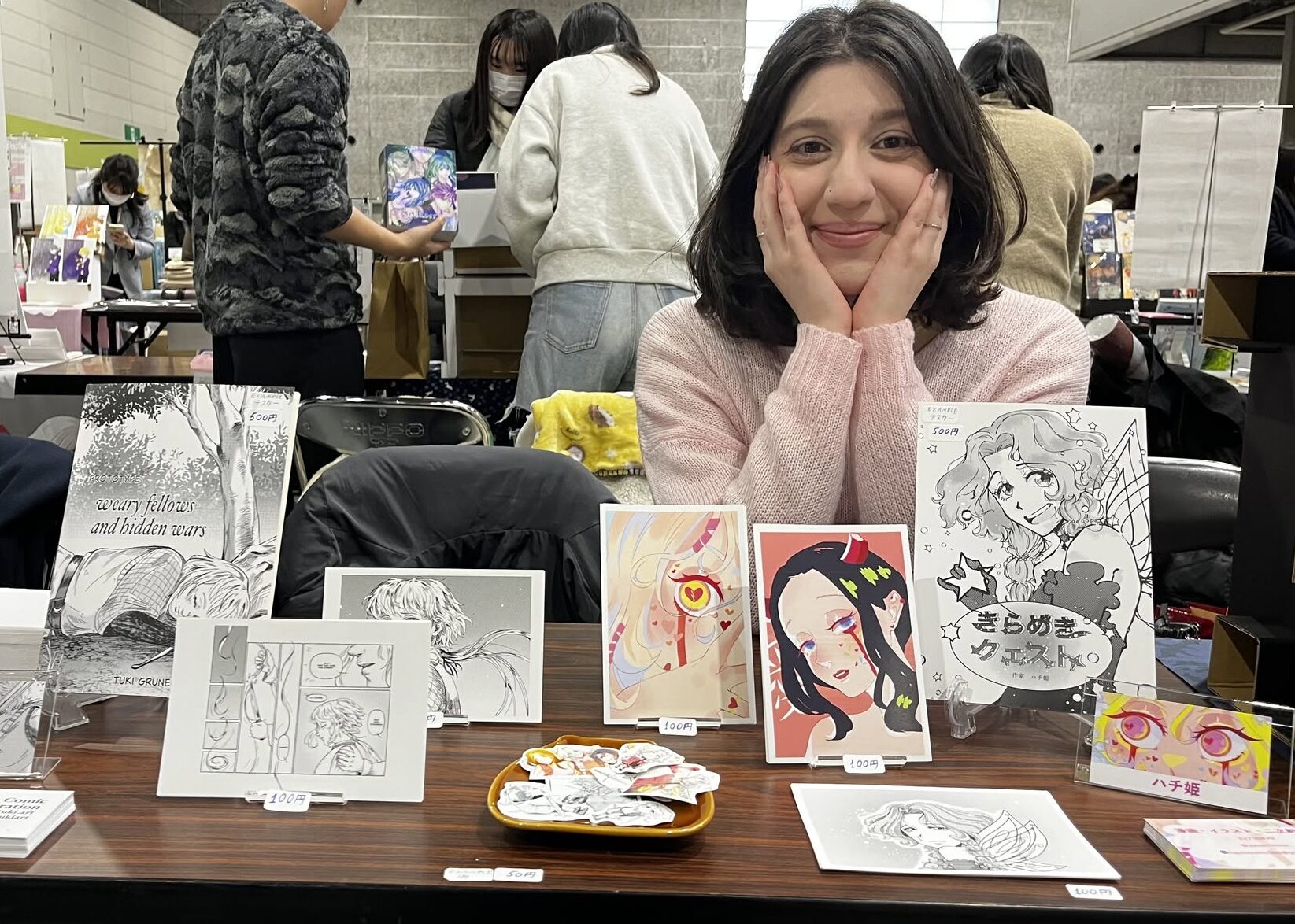
26 years old. Currently majoring in Manga Studies at Kyoto Seika University, where she is creating her own manga themed around Georgia.
① What inspired your interest in Japan and the Japanese language?
My first encounter with Japan and the Japanese language was probably the same as for many others — through anime. I used to watch *Pokémon* and *Shaman King* on a Russian TV channel and really liked them. Since they were dubbed in Russian, I initially thought they were Russian animations.
Later, several anime series began airing on Georgian TV channels as well. I was so eager to see the next episodes that I couldn’t wait for the weekly broadcasts, so I searched online and discovered that they were actually Japanese anime.
After that, I started listening to Japanese music, and my interest in Japan grew even stronger through it. Eventually, I decided to study Japanese when I discovered the band *SCANDAL*. While watching their interviews, I wanted to understand what they were talking about and learn the meaning behind their lyrics.
That’s why I made up my mind to study Japanese seriously.
② What did you do to prepare for the MEXT exam? Do you have any advice for passing it?
I didn’t do any special preparation specifically for MEXT. Before taking the exam, I gained a lot of real-life experience interacting with Japanese people. I worked as a guide for Japanese tourists and also at a Japanese bar, where I was constantly in contact with them.
Through these experiences, I learned not only the language but also a great deal about Japanese culture and the people themselves. I believe these experiences helped me a lot in passing the exam.
However, the biggest factor behind my success was my genuine love for Japan and for the field I came here to study. Throughout my life, manga has been the most important thing to me. I’ve dreamed of becoming a manga artist since I was about seven years old, and I’ve never lost my love or interest in this field. I’ve never regretted the effort I’ve put in.
Even when achieving my goal seemed almost impossible, I never gave up.
③ You are currently studying in Japan. What kind of research are you doing?
My current research theme in Japan is “Georgia in Manga — How can Georgia’s culture, history, and traditions be expressed through manga?”
To carry out this research, I explore and learn a great deal of new information about both Japan and Georgia. Based on what I’ve gathered, I create manga works that focus on Georgia as their central theme.
④ What are your goals after completing your studies in Japan?
After finishing my studies in Japan, I would love to continue drawing manga here. I want to show Japanese publishers and readers a new world within manga — the world of Georgia.
My goal is to deepen understanding and spark interest in Georgia among Japanese readers.
In the future, I also hope to share the knowledge I’m gaining here with children in Georgia, helping them learn in the same way.
Through that, I believe I can bring Japan and Georgia even closer together.
⑤ Do you have any advice for Georgian students who wish to study or work in Japan?
Japan is very different from Georgia, especially in the ways people study and work.
Before coming to Japan, I spent many years gathering information about the country, so settling in and integrating into society wasn’t too difficult for me.
However, for those who don’t have that much information, it’s important to remember that in Japan, people approach everything with a strong sense of responsibility.
You must always be motivated, punctual, and show those around you how much you can contribute to your shared work. Also, be prepared for the fact that you’ll rarely have opportunities to express your opinions clearly and directly.
That’s why it’s essential to learn the Japanese concept of “reading the air” (空気を読む) — understanding the atmosphere and unspoken communication.