【Profile】
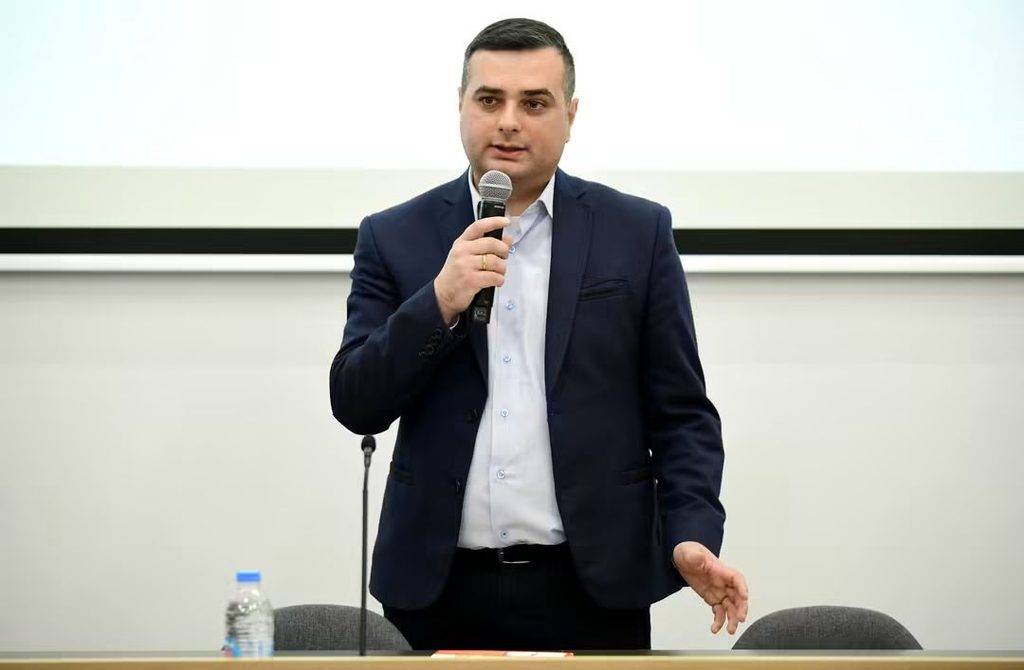
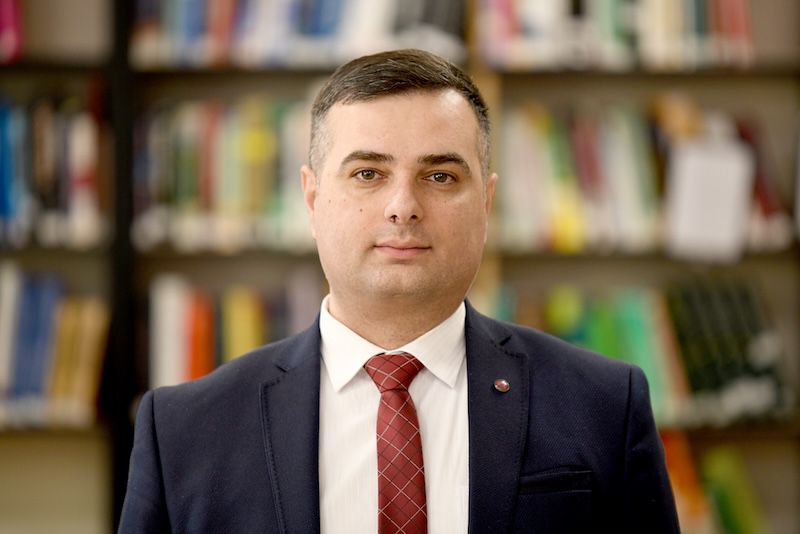
Jaba Meskhishvili(Ph.D). Associate Professor at Ilia State University and Director of the Japan Center at the Giorgi Tsereteli Institute of Oriental Studies.
① What inspired your interest in Japan and the Japanese language?
My interest in Japan began when I was a student. I had always been fascinated by Japan as a country—its culture and advanced technology—but at that time, it was merely a general curiosity. I never imagined that Japan would later become such an integral part of my life.
One day, following my father’s advice, I read a book about the Russo-Japanese War of 1904–1905 and the destruction of the Russian fleet in the Battle of Tsushima. After reading it, I realized that Japan was truly a remarkable nation—one that had managed to defeat a vast Western empire of that era.
Since then, my interest in Japan deepened, and I wanted to learn more about the country. I began reading works by renowned Japanese authors such as Ryūnosuke Akutagawa, Kenzaburō Ōe, Yasunari Kawabata, and Kōbō Abe, and I also started studying Japanese culture and history.
These experiences further strengthened my fascination with Japan and inspired me to learn the Japanese language to understand it more deeply. For that purpose, I entered Tbilisi State University in 2001 and began studying Japanese.
Would you like me to make the English version sound slightly more journalistic and conversational (for an interview article), or keep it academic and formal (for publication or university use)?
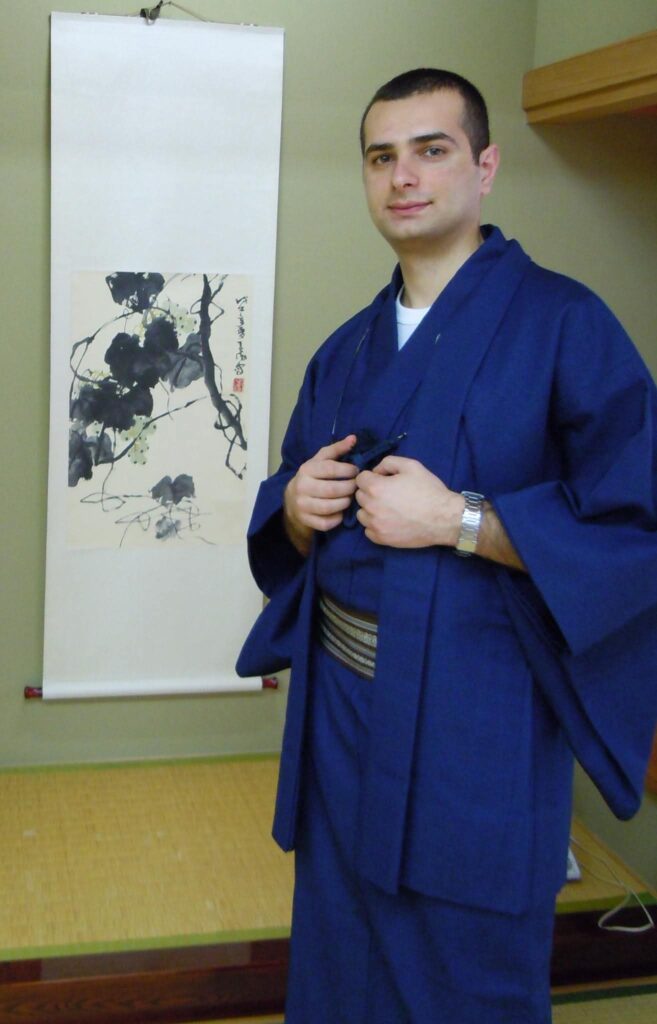
② You studied at Kobe University as a research student. What kind of research did you conduct there?
In 2010, I received the “Research Student” scholarship from Japan’s Ministry of Education, Culture, Sports, Science and Technology (MEXT) and began my studies at the Graduate School of Kobe University. My master’s thesis focused on the “History and Issues of the Enactment of the Military Relief Law.”
However, the research that was more interesting and personally significant to me was the one I conducted during my doctoral studies. In the doctoral program, I returned to the topic that had originally sparked my interest in Japan. My dissertation was titled “The History of Japan–Georgia Relations in the Early 20th Century.”
A major part of this research dealt with the Russo-Japanese War, while another part focused on the relations between Japan and Georgia during the period of the Democratic Republic of Georgia (1918–1921).
At the beginning of the 19th century, Georgia was annexed by the Russian Empire. Therefore, when the Russo-Japanese War broke out in 1904, some Georgians serving in the Russian army were compelled to participate in the war. One of the main objectives of my research was to clarify how Georgians perceived the Russo-Japanese War and Japan itself.
My findings revealed that, although Georgians lived within the Russian Empire and some were sent to fight against Japan by the Russian government, they secretly supported the victory of Japan—a country that was almost unknown to them at the time. The main reason was that the Russian Empire was a common adversary for both Georgians and Japanese.
Furthermore, through the cooperation between Giorgi Dekanozishvili, a leader of Georgia’s Revolutionary Social-Federalist Party, and Colonel Motojirō Akashi, a military attaché at the Japanese legation, the interests of Georgians and Japanese temporarily aligned. With financial assistance from Japan, Georgians purchased weapons in Switzerland and sent them to Georgia to prepare for an armed uprising against the Russian Empire. The ultimate goal was to restore Georgia’s independence.
Although independence was not achieved at that time, Georgia regained its independence in 1918, and Japan was among the countries that recognized the Democratic Republic of Georgia. Moreover, when Soviet Russia occupied Georgia in 1921, Japan was one of the first nations to express support for Georgia.
Through this historical research, I came to realize once again how fascinating and multifaceted the relationship between Japan and Georgia is, and how important it is to study this history in greater depth.
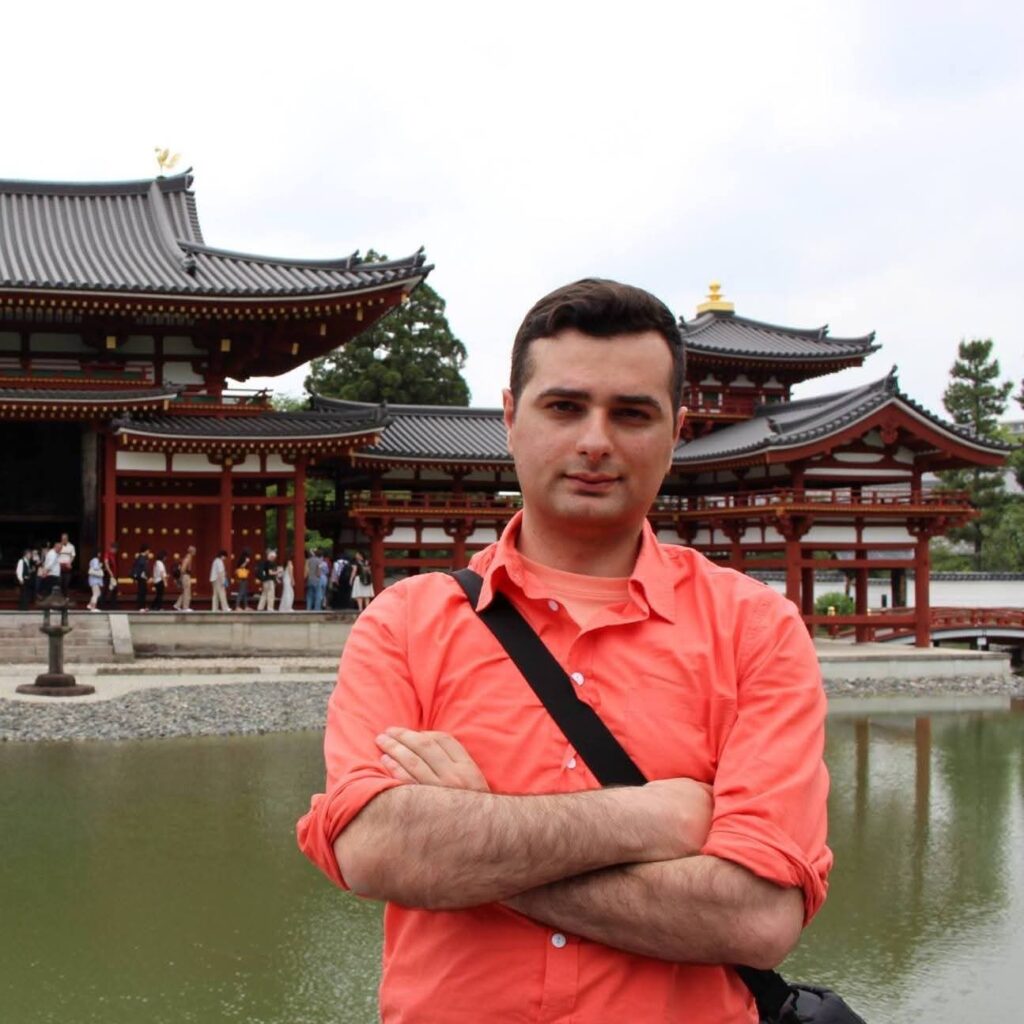
③ What is the most memorable experience from your life in Japan?
It is difficult to choose just one particular memory, because my seven years in Japan were filled with many meaningful and pleasant moments.
However, what remains most vividly in my mind is the kindness and warmth of the Japanese people. They always treated me with exceptional goodwill, and even though I was living in a foreign country, they often made me feel as if I were not in an unfamiliar place at all. Whenever I needed help, they were always ready to stand by me and assist in any way they could. I believe that these human connections are what made my years in Japan so precious and unforgettable.
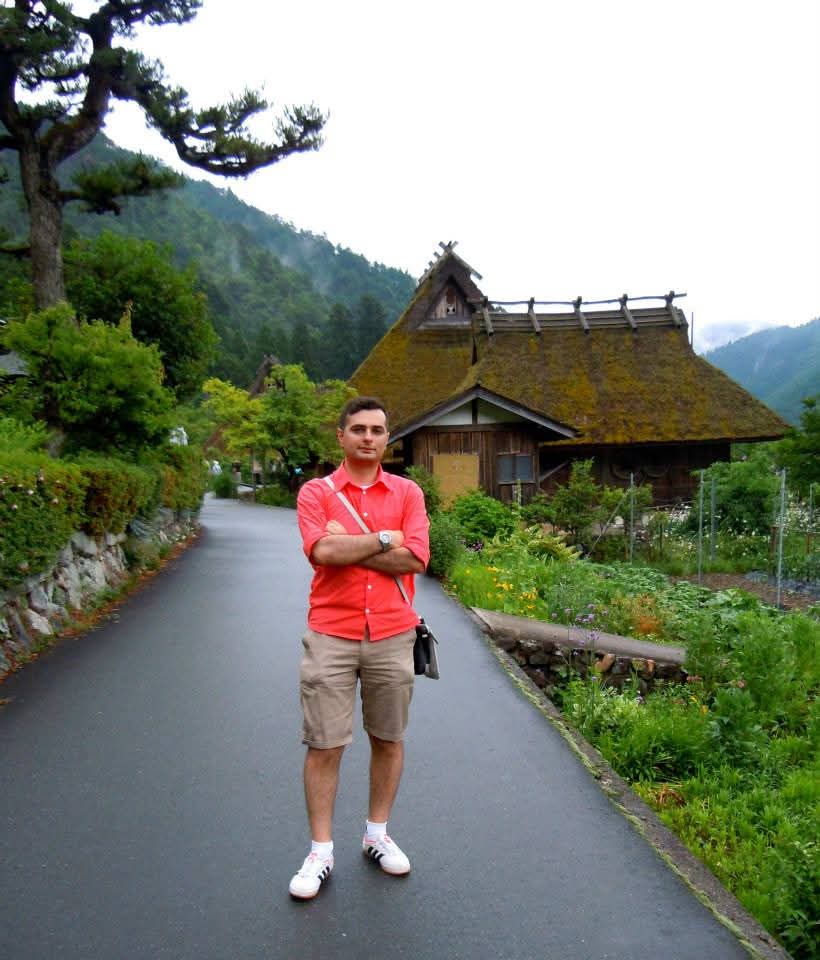
I also deeply miss Japan’s cities and landmarks, whose beauty and charm left a lasting impression on me. Photography is my hobby, and during my time in Japan, the country felt like an endless photographic adventure. There were so many beautiful places around me that it seemed impossible to capture them all. Everywhere I looked, there was something so wonderful and inspiring that I couldn’t resist the urge to take a photo.
④ You teach Japanese at Ilia State University. Could you tell us about Japanese language education at your university?
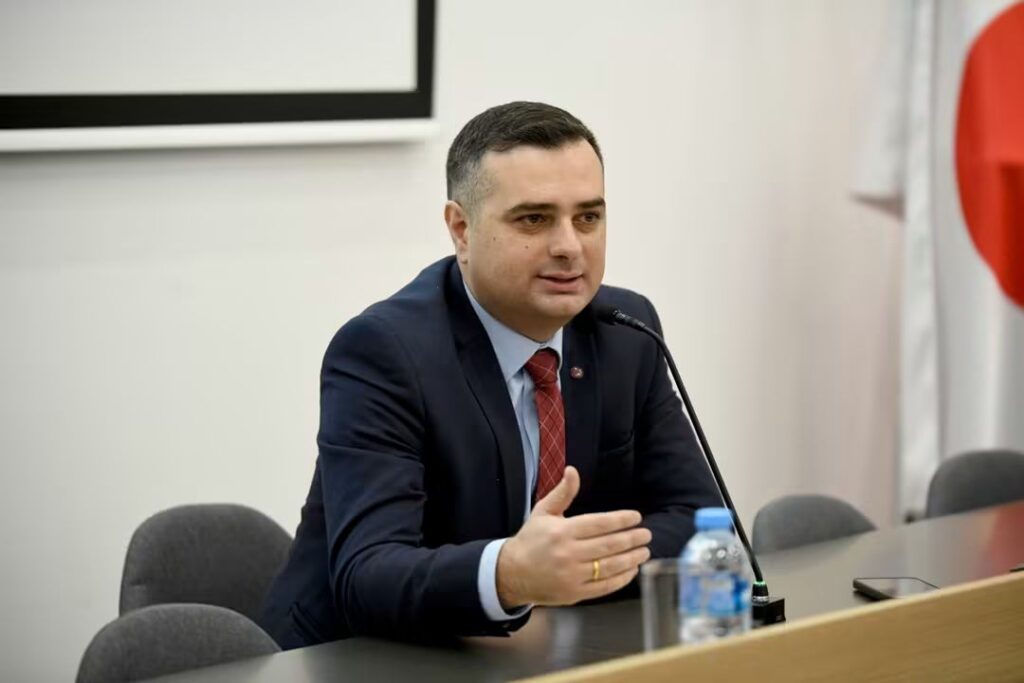
After graduating from Kobe University in 2017, I returned to Georgia. Upon my return, I met with Dr. Giga Zedania, then Rector of Ilia State University, and Dr. Giorgi Sanikidze, Director of the Giorgi Tsereteli Institute of Oriental Studies. They proposed that I revive the Japanese Center at Ilia State University—which had ceased its activities in 2006—and restart Japanese language education. I gladly accepted their offer.
Thus, since 2017, I have been serving as the head of the Japanese Center and began teaching Japanese. Initially, we offered only N5 and N4 levels, but in 2019 we added the N3 level to the program. Interest in Japan and the Japanese language at Ilia State University is very high, and the classes fill up quickly every year.
I mainly teach the Japanese courses myself, but since 2022, we have also joined the JICA volunteer lecturer program. This program allows us to provide Georgian students with additional weekly Japanese lessons. I believe these efforts have greatly improved the quality of Japanese language education, and we have achieved excellent results.
One of the most important indicators of success in Japanese language education at Ilia State University is that our graduates have been awarded MEXT “Research Student” scholarships by Japan’s Ministry of Education, Culture, Sports, Science and Technology. Since 2023, at least one graduate from Ilia State University has received this scholarship every year. Currently, four of our graduates are studying in Japan under this program—at Osaka University, Waseda University, and Kyoto Seika University—pursuing both master’s and doctoral degrees. Another graduate will join them in October 2026 to continue studies at the University of Tsukuba with a MEXT scholarship.
Ilia State University has signed memorandums of cooperation with several Japanese universities, including Tokyo Metropolitan University, Kanagawa University, and the University of Tsukuba. Our collaboration with Tsukuba University is particularly close and multifaceted. In May 2026, we opened the Ilia–Tsukuba Cooperation Center, marking another significant milestone in our partnership. As part of this collaboration, two of our students will study at Tsukuba University in autumn 2026—one in a master’s program and another in a short-term exchange program lasting several months.
To help students interested in Japan gain a deeper understanding of the country and its culture, Ilia State University regularly organizes public lectures, meetings, and cultural events. Since 2017, we have covered a wide range of topics, including ikebana, origami, traditional Japanese clothing, literature, culture, education, economy, foreign policy, and tourism. I believe such activities give students the opportunity to discover Japan not only through language learning but also through its culture, history, and various aspects of modern development.
⑤ What advice would you give to Georgian students who wish to study in Japan or work in Japan-related fields?
This is a very important topic. Learning Japanese and working in Japan are not easy tasks, so I would like to divide my advice into two parts.
1. Learning Japanese
Mastering the Japanese language is certainly not easy. Attending classes and studying for one hour a day at home will not be enough. If you decide to learn Japanese, you must be prepared to work diligently every single day.
I always tell my students that attending lectures and completing assignments alone is not sufficient. Independent study is essential for learning Japanese. For example, watching videos in Japanese, listening to Japanese songs, reading various materials, and—if possible—communicating with Japanese people are all very helpful. It is also important to set small, concrete goals and achieve them systematically. For instance, decide how many kanji characters or vocabulary words you will learn each week and stick to that plan.
For those who do not have frequent opportunities to interact with Japanese people, I especially recommend reviewing what they have learned regularly so that they do not forget it over time. Such consistent, daily effort helps students reach a high level of proficiency. Among my students, those who followed this advice and studied responsibly have achieved excellent results in Japanese.
2. Working and Living in Japan
Working and living in Japan is a fascinating opportunity, and I believe many Georgians dream of doing so. In today’s globalized world, opportunities to study and work abroad have become more accessible, allowing people to build careers in various countries—including Japan.
However, in my view, to build a successful professional career in Japan, having strong English skills and professional qualifications alone is not enough. For those who wish to work in Japan, it is important to have not only professional knowledge but also a certain level of understanding of the Japanese language and local culture.
I advise anyone planning to work in Japan to reach at least the N4 level of the Japanese Language Proficiency Test (JLPT) before going. This will enable them to communicate with local people at a basic level and, importantly, handle everyday matters independently.
In addition to language skills, it is essential to learn about Japanese social etiquette and behavioral norms. This will help newcomers adapt more easily to the new environment and avoid misunderstandings or conflicts that may arise from cultural differences—or, in more serious cases, violations of local laws.
Fortunately, with the development of modern technology and the internet, obtaining such information has become much easier. Today, there are countless useful resources about living and working in Japan, social behavior, and local customs. Therefore, I believe that those preparing to go to Japan can easily find the necessary information and get ready for the environment in which they will live and work.